

INSIGHTS
Be a goldfish. Ten seconds and you're free.

In a world that runs on rejection, Ted Lasso’s most quietly radical idea might be the one about the happiest animal on earth. Here is how to actually live it.
There is a moment in the first season of Ted Lasso where the coach pulls aside a player who is drowning in his own mistakes. Sam Obafemi has just cost his team a chance at victory. He is sitting with the full weight of it when Ted crouches down and delivers the most unexpected pep talk in sports television history. “You know what the happiest animal on earth is? It’s a goldfish. You know why? It’s got a ten-second memory. Be a goldfish, Sam.”
Sam goes back out and scores. Of course he does. That is the magic of the bit. But here is what the show never quite unpacks: that instruction is not about forgetting what went wrong. It is about refusing to live there.
The Idea
If you are in any field that requires you to put something out into the world and wait for a response, you already know what a sea of no’s feels like. The freelancer who pitches sixty editors before one says yes. The founder who hears “not the right fit” so many times the phrase starts to lose its meaning. The creative who submits, waits, submits, waits, and begins to quietly wonder whether submitting was ever the right move at all.
The conventional advice on rejection is to reframe it. Every no is one step closer to a yes. Rejection is data, not judgment. Your idea is not the problem, just the timing. These are all true and also, after the fortieth no, completely useless.
The goldfish idea is something different. It is not reframing. It is a practice of duration. You feel the rejection fully. You are allowed all ten seconds of it. And then you swim forward, because the water is right in front of you and there is more of it than you can see.
“The no is not the verdict. It is just the weather that day.“

The Practice
- Give the rejection its ten seconds. Suppressing the sting does not make it smaller. It makes it louder. Read the no, feel it, say out loud “that one hurt.” Then close the tab. You are not being callous. You are being a goldfish.
- Separate the result from the record. One no is a data point. Twenty no’s from the same type of person might be a signal. But most people stop long before they have enough data to know which one they are looking at. The goldfish keeps swimming long enough to find out.
- Write your next send before you process the last one. The creative momentum matters more than the emotional resolution. If you wait until you feel good about the rejection to send the next pitch, you will wait a long time. Send first. Feel better later.
- Build a scoreboard nobody else can see. Ted does not keep score in the traditional way. He tracks effort, character, improvement. Build your own metric. Pitches sent, not accepted. Drafts finished, not published. Conversations started, not converted. The sea of no’s starts to look different when you are watching a different number go up.
- Find your locker room. The goldfish does not swim alone. Ted’s whole approach only works because of the people around him. You need at least one person who knows exactly how many no’s you have absorbed this month and who will greet the next yes with the appropriate amount of noise.
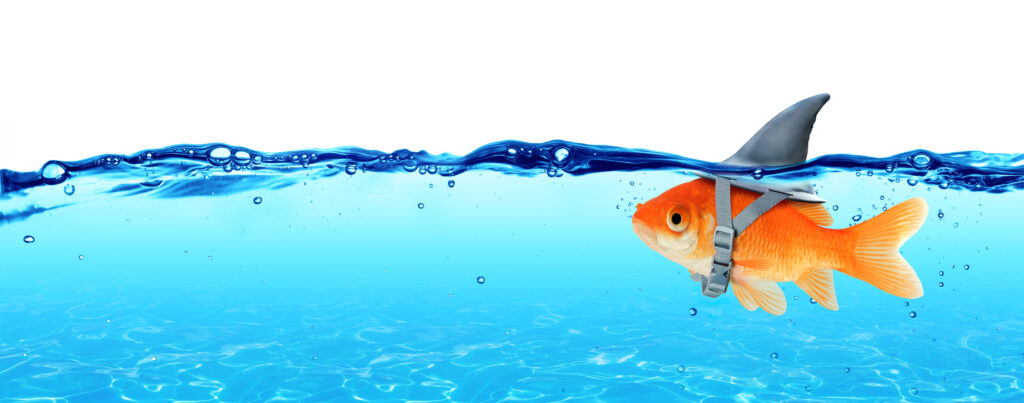
A note on what the goldfish is not. It is not naivety. Ted Lasso is not a naive character. He reads the room. He adjusts. He loses badly and cries in a bathroom and comes back out. The goldfish memory is not about pretending the hard thing did not happen. It is about choosing not to let it author the next chapter.
The sea of no’s is real. Anyone who tells you otherwise is either very early in their career or has not been honest with themselves. The no’s are real and they accumulate and some of them arrive at the exact worst moment and they will make you question whether the whole thing is worth it.
But the goldfish does not know it is in a sea. It knows there is water, and forward, and right now. That is the whole philosophy. It is almost embarrassingly simple. It works anyway.
Ten seconds. Then swim.